Junior League of Dallas


1920s - 1950s

1920s
With its formation, the JLD concentrated on two main volunteer activities: The Handicapped Shop and the Junior League Home for Convalescent Children. As the 1920s progressed, activities were expanded:

  • Following suggestions from the National Board, the Dallas League became more active in cultural and arts programs.
  • Members raised money through the JLD's first cookbook, rummage sales, a tearoom where members modeled in style shows and served as waitresses, and dances at the Adolphus and Baker hotels. The sewing committee also made and sold dish towels and hand-knitted dresses.
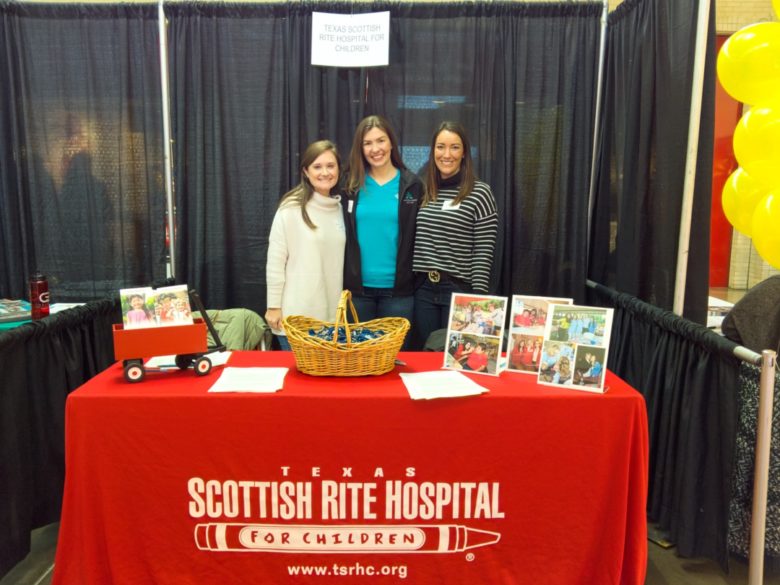
  • By 1924-25, JLD membership had grown to 87 Active members, five Provisionals and four Transfers. The first Provisional course with a training requirement began in 1926. In 1929, an Investigation Committee chose to develop the state's first occupational therapy department for crippled children at Scottish Rite Hospital.

1930s
Philosophies shifted in response to the depression of the 1930s. "We did not feel that we could conscientiously start using our time and money in instruction when the unemployment situation was so acute," wrote Maidie Moroney, 1930-1931 President. "We decided, consequently, to defer the inauguration of any permanent charity and to bend our immediate effort upon the relief of the unemployed."

  • In 1930, the JLD served 14,066 meals in three and a half months through the Salvation Army. The League furnished food and clothing to needy families and helped pay rent for the unemployed.
  • During the 1930s, the League published a second and third cookbook, and presented the first Follies to raise money. Mary Swaing, 1931-1932 President, wrote "We felt that our League was anxious for one, big, thoroughly planned money raising event, rather than being continually confronted with ticket selling. We felt that in a year of depression, such as we have just had, a "Revue" was a particularly suitable way to raise money from people who really have it in return for high class entertainment, for which they were particularly willing to pay."
  • The League adopted a policy of not raising funds unless absolutely needed and began to concentrate on giving volunteer time and service more than their money to the community.
  • Internally, the 1930s saw the formation of the Placement Committee, Publicity Committee and Excuses Committee. In 1935, the Membership Committee was renamed the Admissions Committee (and renamed the Membership Committee in 1990).
  • In 1939, at the onset of World War II in Europe, the civic-minded membership listened intently as the guest speaker at their monthly meeting gave a "highly interesting and provocative" lecture on Nazi Germany.

1940s
The early 1940s marked the war years where war jobs, ranging from making Red Cross kits to nursing to working the USO Canteen, were required of members in addition to their League work. In cooperation with the government's wartime restrictions, a general membership meeting in 1943 was canceled "as an emergency measure to suit these strenuous and nerve-wracking times when there is important work that must be done, and where every ounce of gasoline must count."

  • The 1940s saw another successful Follies, the opening of the Women's Exchange, the revival of the League's Children's Theatre and the publishing of another cookbook.
  • From 1944-1949, the League produced its own radio program. "Radios have become as automatic a part of a child's life as turning on a light switch," reported the March 1944 JLD News Sheet.
    "The League was very, very different in the 1940s," explains Mary Frances Yancey, 1948-1949 JLD President. "Size made it different. Dallas was different. We were usually looking for something that was a really great group activity. It was a very closely held organization. You saw your friends when you volunteered, and you volunteered together. Part of that was to preserve gasoline."
  • "The League at that time was trying to get off the society page and prove our worth as a volunteer organization," Yancy adds. "We steered clear of politics, and we protested the AJL getting in politics. We had few members who worked in those days. It was the rare thing."
  • In the spring of 1945, the JLD had 188 Active members. Placement possibilities ranged from the Dallas Museum of Fine Arts ("pleasant surroundings, educational") to the 8-12 Saturday night shift at the emergency desk of Parkland Hospital ("thrills and extra credit").
  • The Transfer Club was formed.
  • With the end of the war in 1945, the League's activities changed from war to peacetime routines. The League's "Welfare Fund" changed to the "Community Service Fund."
  • The League revived many of its money raising activities.

1950s
With the 1950s came television. The JLD concluded its radio program and started producing TV programs. Topics ranged from profiles of health and welfare agencies in Dallas to episodes on children's books. The League also continued its focus on children.

  • In 1952-1953, the League began the Children's Development Center, a training school for special education and emotionally disturbed children.
  • Concerned with the approaching shortage of teachers, the 1954 membership took on a program of teacher recruitment.
  • The Sustaining Club was organized in 1954-1955, and in 1957-1958 the placement program was re-evaluated. "The greatest problem is not finding a job for a person, for the community is crying for volunteers, but fitting the person to the job," reported a 1958 Junior League newsletter.
  • By 1958, the number of Professional members - members who worked outside the home -grew to 32. "Time was when holding a job and belonging to the League were pretty incompatible, both from the standpoint of practicality and the whole spirit of the thing," wrote Kay Gaines in 1958.
  • Never before endorsing a candidate, the League's strongly guarded political independence came to an end in 1952 when League members, both Republican and Democrat, campaigned openly and vigorously for Eisenhower.